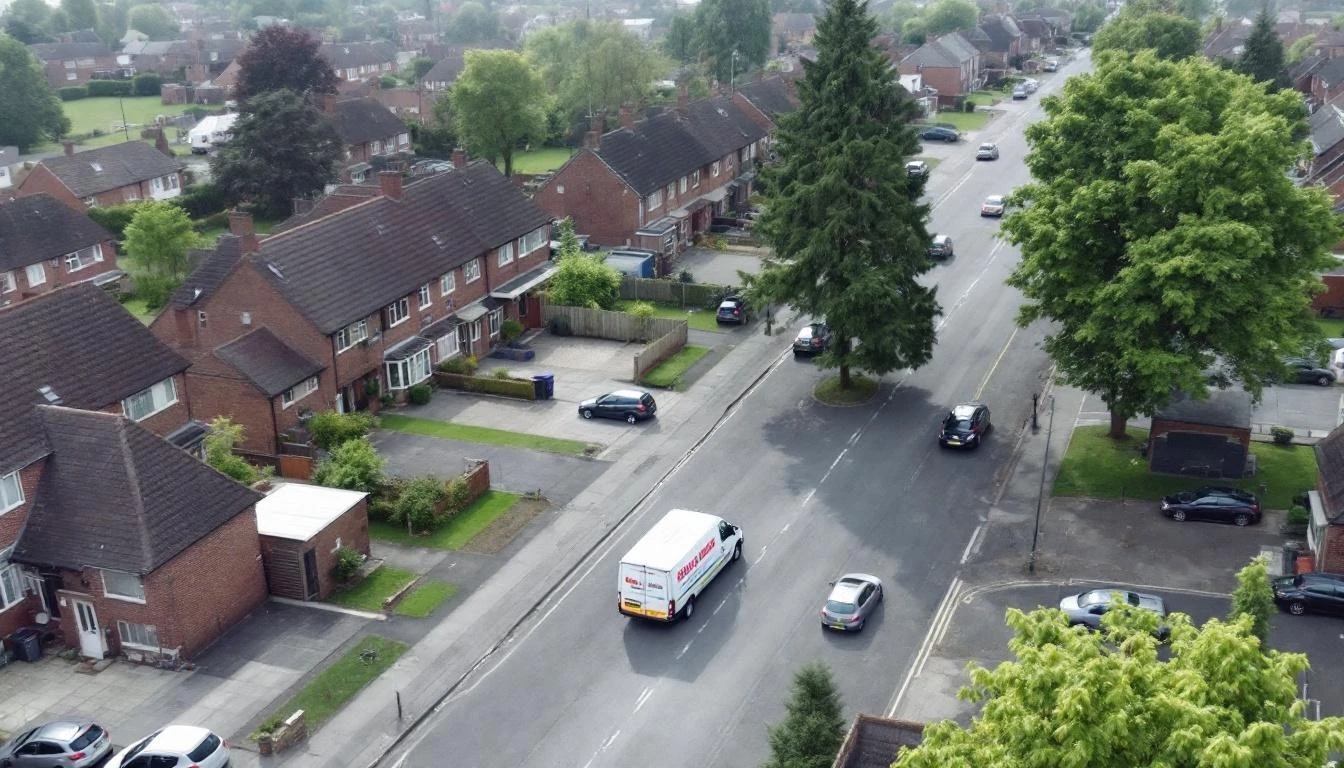
Drainage in Swindon
Swindon's drainage landscape reflects a town that grew from a small market settlement into one of England's most rapidly expanded post-war towns. The original railway town was established by Brunel and the GWR in the 1840s. It now sits alongside housing estates built at pace from the 1950s through to the 1990s, each era bringing different drainage materials and challenges.
The geology beneath Swindon is a key driver of drainage behaviour. The town sits at the boundary of several geological formations. Upper Greensand and Gault Clay dominate the lower central areas, chalk influences the higher ground to the south and east, and Oxford Clay underlies the northern vale. This variety creates very different drainage conditions across the town. Properties on Gault Clay experience seasonal ground movement that stresses buried pipes. Chalk-influenced areas see water table changes that can cause water to enter drainage systems in wet winters.
The GWR railway works gave Swindon a concentrated industrial heritage zone, now largely redeveloped as the Designer Outlet and STEAM Museum. The original Victorian grid of railway workers' cottages in Rodbourne and Even Swindon has some of Swindon's oldest drainage infrastructure. Some vitrified clay pipes here are now approaching 150 years old. These Victorian systems were built for far lighter use than modern homes demand. Their condition varies greatly depending on ground conditions and whether they have ever been maintained or upgraded.
The rapid post-war expansion produced housing estates across north, west, and east Swindon in the 1960s and 1970s. These were commonly fitted with pitch fibre pipes. Pitch fibre was used as a cheaper alternative to clay during the building boom. It has a design life of around 40 to 50 years — meaning large swathes of Swindon now have drainage at or beyond the end of its intended life. Pitch fibre deforms under ground pressure, creating an oval or collapsed shape that restricts flow and traps debris.
Swindon's continued growth into the 1980s and 1990s brought uPVC plastic drainage, which ages better but still needs maintenance. It is also prone to joint failure where ground movement is significant. The newer developments at Wichelstowe, Commonhead, and the eastern expansion zones have modern drainage designed to current standards. Connecting these to the town's older Victorian and postwar network creates transition zones that need careful management.
Our engineers have extensive experience with Swindon's full range of drainage types and ground conditions. We work regularly with Victorian clay, postwar pitch fibre, 1980s uPVC, and modern MDPE systems. We understand how Swindon's varied geology affects each property's drainage. Whether your problem is in a railway cottage in Even Swindon, a 1970s semi in Penhill, or a new home in Wichelstowe, we bring genuinely local expertise to every job.